
Why is the Mississippi River one of the most underrated fly fishing destinations in the U.S.?
The Missouri, the Yellowstone, the Delaware, and the South Platte often come to mind or top your Google search for the best fly fishing water in the US. But one river rarely makes that list: the nation’s longest, the Mississippi.
When you hear the name, you usually picture riverboats and barges headed for New Orleans. You rarely think of Minnesota, where the Mississippi and its tributaries offer some of the country’s most underrated fly fishing for smallmouth bass.
Why does low fishing pressure matter for smallmouth bass on the fly?
Popular destinations face one big issue: pressure. The fishery feels pressure, and fish react to constant anglers tossing flies. Over time, they become hesitant, making them harder to catch.
That’s one of the factors that makes the Mississippi so special. The sections John fishes see almost no fly fishing pressure. Any angling pressure is mostly conventional: whopper ploppers, spinning gear, and standard tackle.
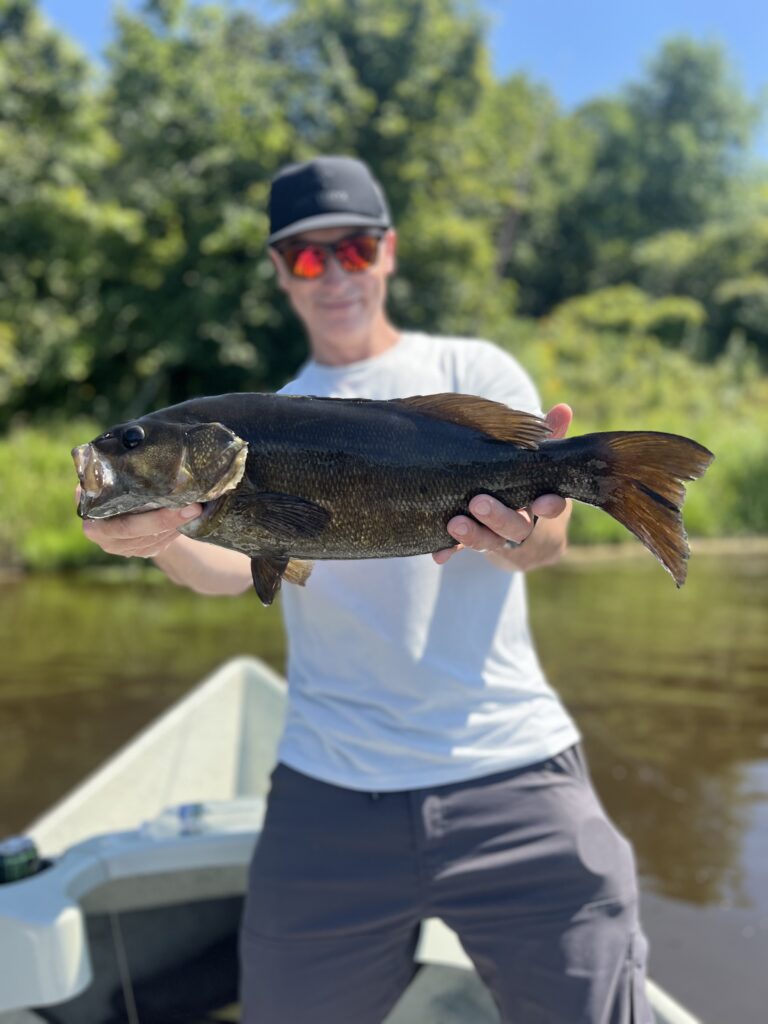
The result? Native smallmouth bass that have never been stocked or heavily pressured eat flies with remarkable aggression, making this a standout guided fly fishing experience.
What makes wild smallmouth bass different from stocked fish?
Now, by the time you’re getting to this paragraph, you’re probably thinking about a sentence in the last paragraph that said these are native fish. You did not misread that.
Every smallmouth bass in the Mississippi near where John guides is a wild fish. The river has never been stocked here. That matters more than it might sound at first.
Wild fish in unstocked water develop differently. They are more instinctively tuned to the environment, stronger for it, and in a river ecosystem that has largely been left alone, they have built a self-sustaining population over decades.
How does winter improve smallmouth bass fishing?
One of the big things that has helped these wild fish survive is winter. The upper Mississippi freezes hard. From December through March most years, the fish are locked under ice and unreachable.
No pressure. No boat traffic. Just the river, the cold, and time.
When the ice goes out and the water warms, the smallmouth feed hard. They are not spooked; they are hungry and not burned out from constant catch-and-release pressure. This seasonal reset is a huge factor in why smallmouth bass fly fishing in the Mississippi River is so productive.
Why is smallmouth bass one of the best fly fishing species?
One of the most common and most fun fish to go after here is the smallmouth bass. But it is different from traditional spin fishing.
Smallmouth are aggressive, strong, and incredibly willing to eat surface presentations, unlike trout that can be selective. Once hooked, they put up an incredible fight, making them one of the most exciting freshwater fly fishing species you can target.
Why is the Mississippi River still a hidden gem for fly anglers?
The good news is getting them on the fly is definitely doable. These fish do not see many flies, so when they do, they often react fast.
That is what makes this wild population so unique. Low pressure, no stocking, and long winters that allow fish to recover and grow create the perfect combination for an incredible day on the water.
Minnesota may not be known for river fly fishing for smallmouth, but that is exactly why it stands out. While many focus on the lakes, this stretch of the Mississippi offers something different: a chance to fish truly wild water and experience one of the most underrated fisheries in the country.
If you are looking for a unique, low-pressure guided fly fishing trip for smallmouth bass, reach out to The Ridge Fly Fishing.
Whether you are new to fly fishing or an experienced angler looking for something different, we will help you get on wild fish and experience a side of the Mississippi most people never see.