
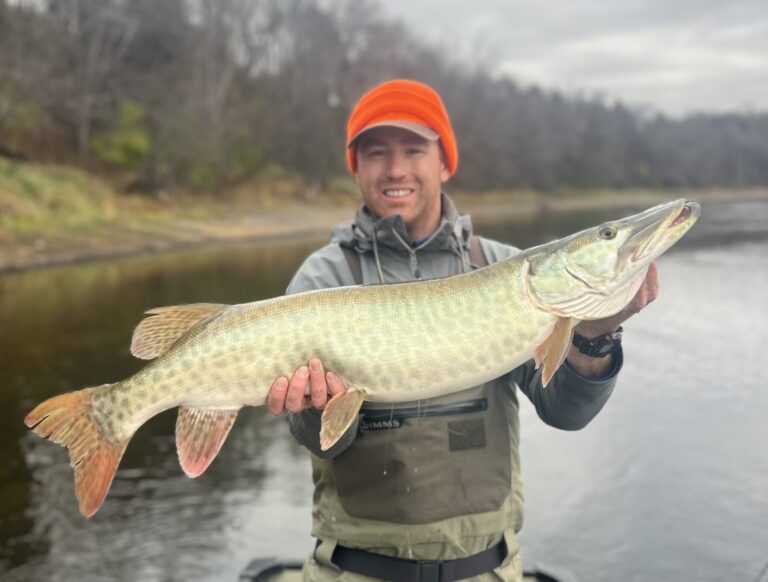
When September arrives on the Upper Mississippi and its tributaries, things start to change. With cooler temps, the water cools, summer heat fades, and baitfish gather in tighter groups. Those groups, and their need to feed, draw in smallmouth and muskie. For fly anglers familiar with the river, this is often the best time for fall muskie fishing and smallmouth action alike.
Smallmouth that were scattered across shallow flats and current seams in summer start to gather in more predictable spots. As they feed more actively to bulk up before winter, topwater flies can still work, especially early or late in the day. But streamers and swim flies become more important. The fish get bigger, the fights last longer, and you’ll notice more consistent aggressive strikes as fall goes on.
Muskie fishing changes in much the same way. Cooler water makes them more active, so they’ll follow big flies farther and are more likely to strike. You need to see this part of the year, it’s their time to store up calories before the cold of winter rolls in. Overcast days and the first cold fronts of fall are often the best times. You need to cover water carefully, make long casts, and always be ready. When a muskie finally bites, it’s rarely gentle. The sudden pull and strong head shakes are what keep anglers hooked on muskie fishing.
Fall also changes the feel of the river, and we aren’t just talking water temps. All that summer boat traffic thins out, and popular ramps get quieter. You can run longer floats, hit multiple stretches in a single day, and fish without constant company. The light improves for seeing into the water, and the air is cleaner. The whole day slows down in a way midsummer rarely allows.
Conditions become more important this time of year. Water levels can drop during dry stretches or rise quickly after rain, and temperature swings influence where fish hold and how active they are. A guide on the water regularly can adjust in real time, shifting sections, changing fly size or retrieve speed, or moving from smallmouth water to muskie water as the day develops. That flexibility is harder to manage when figuring the river out on your own.
If you have only fished the Upper Mississippi in the heat of summer, fall is worth the trip. The fish are there, pressure is lower, and the river feels more open. The smallmouth fight harder. The muskie become more catchable. The days are shorter, but the fishing is often better. For folks who spend a lot of time on this stretch of river, autumn is the season they look forward to most. Reach out to The Ridge Fly Fishing to book your fall float and see why.